Friday, 25 January 2013

My Identity In My Grave Goods


 Although this may seem like a very depressing topic, I think it might be an interesting brain exercise!  What would you put in your grave if you wanted to express your identity to future archaeologists?  If you're anything like me, you have absolutely no clue!  I started off by thinking about things I liked, my hobbies and my passions, which is great way to express identity; however, that is not what I would do.  Maybe it is because I am an anthropology major and have an idea as to how an anthropologist might interpret my grave goods, or maybe it is just because I am strange, but I would choose goods which would (hopefully) express my ideological frameworks.


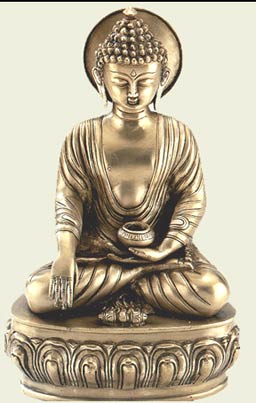
First off, I would prefer to be cremated, which I think says a lot in and of itself.  A cremation says a lot about the environmental concerns of a society or culture (especially today), as well as retaining a notion of reincarnation.  Now, I am not outright claiming that I completely believe in this, but I really do like the idea of coming back and learning to be a morally better person, which especially corresponds with Buddhist beliefs.  Perhaps the inclusion of a Buddha statuette would further enforce this.
    Image taken from: http://www.be-mag.com/msgboard/showthread.php/41926-New-rule.
Throughout my schooling, I have developed a strong yearning for scientific theories and hypotheses, especially within the realm of physical anthropology. I think that archaeology needs to follow in the foot steps of forensic anthropology, and that this may provide more concrete answers to the questions that sites bring up. How would I represent this in a grave?  Well, for starters, I cannot help but think about Dr. Temperance Brennan from the t.v. show "Bones", and what she would say about science and anthropology.  A DVD of season one of "Bones" will suffice! 

Lastly, I would include a painting that my sister-in-law and I purchased together.  It is an oil painting done by a local artist of two ships in battle, and it speaks multitudes to me as an image of peace.  I say "peace" because this is how I define beauty, and this painting is truly beautiful.  I think it is very important to never lose the ability to see beauty, because too often we all get a little lost in the hardships of life.

 
This is my own picture of the oil painting mentioned above.

Now, if someone else was to choose my grave goods, it would be my family and my fiance.  I think that they would probably choose items that would represent my relationships with them, as well as those that would express my identity.  Perhaps my engagement ring would be chosen?  Albums that I love oh so dearly (such as an original 1975 "Wish You Were Here" album still in its untouched shrink wrap), and maybe some sheet music for the flute?  Pictures and short poems?  It is hard to tell, but I know that my family would choose items that would probably better represent me than those that I would choose for myself.  I think this is because I would want to express something other than my identity, whereas my family would want to acknowledge the specific individual (me) who has passed so that they could always come back to those items. 

After completing this exercise, I have grown more concerned about the way that archaeologists interpret grave goods.  There are so many ways out there to interpret one item in a particular context, which makes me nervous that we may be interpreting sites, their graves, and grave goods incorrectly.  I am starting to see a theme in my blog: Scientific Methodologies towards Anthropology!  I cannot escape it!

Thursday, 17 January 2013

Ethnography, Ethnoarchaeology, and Analogy

Boy is that a mouthful!  These three concepts (ethnography, ethnoarchaeology, and analogy) seem to be at the forefront of the methods applied to the research of burial rituals, which is understandable considering the lack of living evidence archaeologists have to work with in this field!  Ethnography is the creation of a rich description of a community or culture which has been produced throughout a prolonged stay with such a community.  Ethnoarchaeology uses ethnographies and physical remains for the comparison between different cultures in order to create hypotheses about cultures we cannot research ethnographically today.  In my Archaeology of Death class this week, we were asked to critically comment on analogies made by Ramilisonina and Mike Pearson who produced research relating the burial practices seen at Stonehenge, Woodhenge and Bluestonehenge in England with Ramilisonina's native Madagascar megaliths.  The interview link is posted below.

www.archaeology.org/1001/etc/conversation.html     

Drawing analogies in archaeological research is a tricky thing to do, especially since archaeologists may be cursed with a lack of hard evidence.  Rimilisonina and Pearson's research may make some squirm in that they are trying to tie the knot between two vastly distinct places and time frames.  However, I feel that their notion makes an important point: we are all human, therefore, there is a chance in reproducing the same ideological practices.  Yet again, with that said... I think that Rimilisonina and Pearson are making quite a large jump without providing any substantial evidence linking the two sites further.  A link to the critique of Rimilisonina and Pearson's methodology outlined in "B"'s blog is provided below.   

http://brian-mountainman.blogspot.ca/2010/11/sacred-stones-and-madagascar.html

I have to be honest here, I am torn.  I think that it is definitely archaeology's duty to provide hypotheses to explain the odd phenomena on this planet we call Earth, but (and this is a big "but" for me) I think that if archaeology wants to be considered a "real" science, its scientists must be gathering physical evidence and data to falsify hypotheses, thus putting these hypothetical hypotheses to work.  Otherwise it seems to be a waste of time, hard training, and intellect.  Analogies are great, BUT they need to be tested.

Lastly, I would like to conclude with bringing in the idea of ethnography since one cannot have ethnoarchaeology without ethnography!  I am currently reading an ethnography by Andrew Walsh called "Made in Madagascar: Sapphires, Ecotourism, and the Global Bazaar" which is a detailed account of how sapphire miners make a living in Ankarana, Madagascar.  It is interesting to note that digging into stone is an essential step in mining sapphires, something that by Rimilisonina and Pearson's research would deem wrong, since "stone in Madagascar is really for sacred purposes" (www.archaeology.org/1001/etc/conversation.html). Perhaps more recent ethnographic research needs to be done?  Also, I find it hard to use an analogy as an archaeological method since it heavily relies on ethnoarchaeology, and ethnoarchaeology relies on the use of ethnography.  It is virtually impossible to have a written ethnography on the people who built Stonehenge, Woodhenge and Bluestonehenge.  Therefore, I think that the analogy that Rimilisonina and Pearson's notion may skew our knowledge of each, individual culture, leading academics and the public down a misinterpreted path.

This is a photo of a cave entrance in Ankarana, Madagascar.  Malagsy people would go into these caves to converse with their ancestors by drawing out very precise rituals (Walsh, 2012).
Attributed to: Rhett A. Butler, taken from http://travel.mongabay.com/madagascar/images/madagascar_3957.html


Wednesday, 9 January 2013

Photography at Pioneer Square

I just wanted to share some photos I took at Pioneer Square here in Victoria.  I took these in late January of last year.


Who I Am

Hello!  I am Caitlin, a third year undergraduate student in anthropology at UVic.  What really got me into anthropology was its ability to somehow make me feel connected to the rest of the world without having to travel (although I would love to actually see the world).  In anthropology one gets the opportunity to learn about different cultures, as well as one's own culture, and is equipped with the tools to interact with people from different parts of the world who have alter viewpoints than one's own.  I find this fascinating!  One of the reasons I fell in love with the prospect of taking the Archaeology of Death course offered at UVic was that it deals with one thing that all cultures must account for in some way, and that is the how they should treat the imminent process of death.  It will be very interesting to see how these different groups deal with such a common natural item.

I used the title "Pieces Left Behind" because that is exactly what archaeologists have to work with when they find a burial of some kind.  They must sort out the "pieces" that the living have decided (either consciously or not) to leave with their dead, and figure out if these items have any worth or meaning for the dead individual and/or the culture that buried him/her.  I am truly excited to start this journey of examining the dead and how this might relay back to the lives of the living who did the burial.   


 Picture taken from: http://www.buzzle.com/articles/day-of-the-dead-skull-tattoos.html